An interim warehouse manager is the fastest way to regain control when a warehouse at your Czech subsidiary stops working and production starts waiting for material. That is exactly the situation our new interim warehouse manager is walking into at a Czech manufacturing client: an ERP nobody uses, material scattered around the building, one warehouse operative left out of four and around 50 orders past their delivery date. The brief is simple and as hard as it gets: start from zero and rebuild the warehouse.
If you run a Czech plant from abroad, this kind of crisis often reaches head office late. Warehouse chaos builds up quietly, and by the time it is visible from abroad, the local team is too busy surviving each day to fix it.
What is an interim warehouse manager?
An interim warehouse manager is an experienced manager who takes over the running of a warehouse and internal logistics for a limited period, usually a few months. They are brought in when the warehouse is holding up production, the manager or team has left, stock records no longer match reality, or the warehouse needs to be rebuilt. Unlike a permanent hire, they start within weeks, work to a clear mandate and end date, and hand over a functioning warehouse to a permanent successor. Big Interim provides interim warehouse managers and interim logistics managers in the Czech Republic, typically starting within two weeks.
Warehouse chaos that stopped production: the starting point
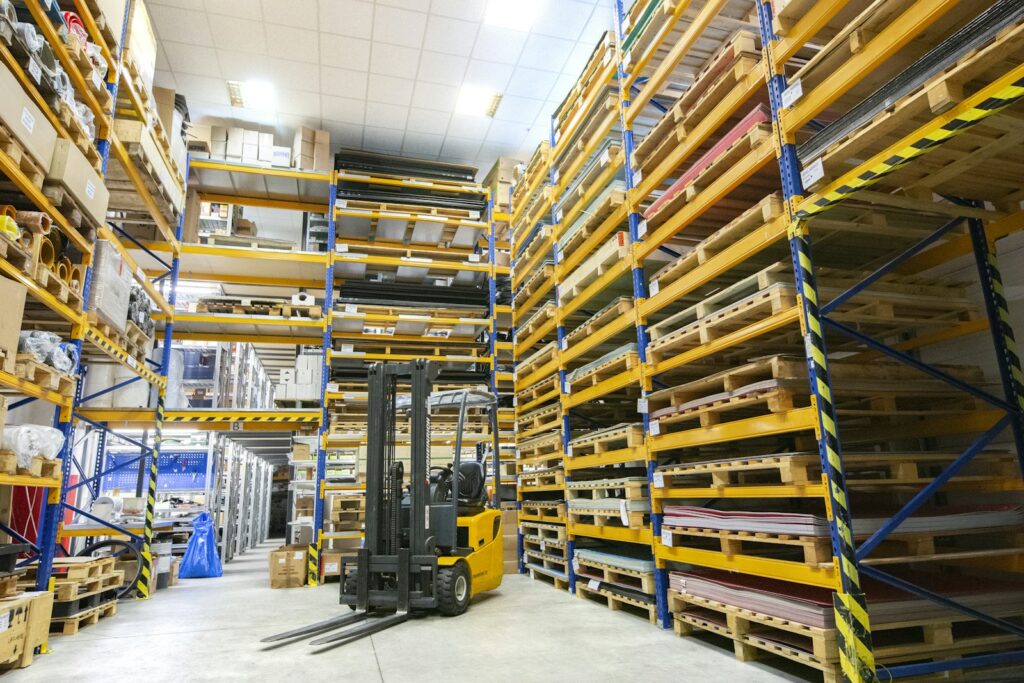
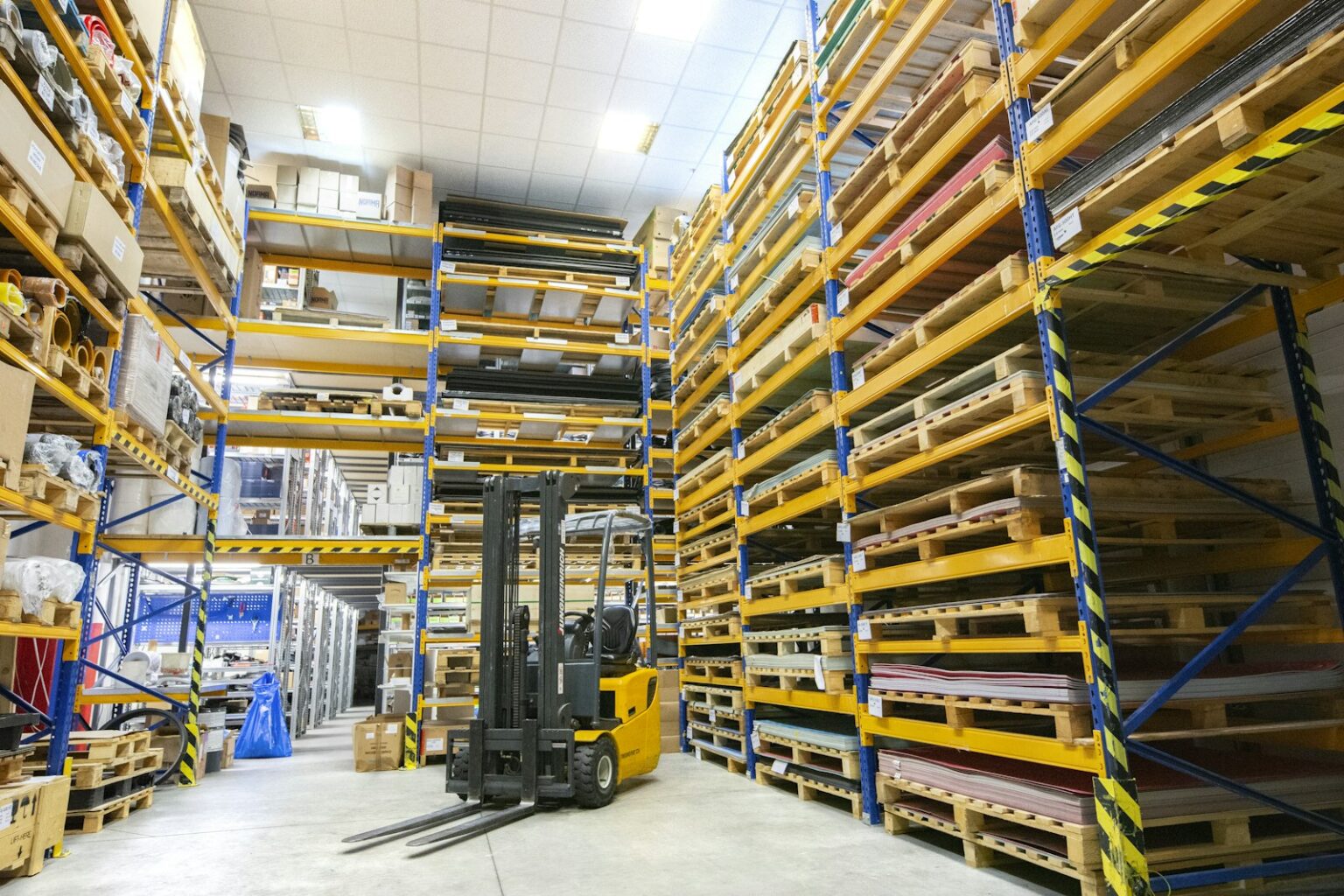
The client is a manufacturing company whose warehouse supplies both production and assembly. When we first saw the site, this is what we found:
- The ERP system had fallen out of use. Goods receipts and issues were no longer scanned, so system stock had nothing to do with physical stock.
- Material was mixed together and stored in many places around the building, to the point where incoming lorries had nowhere to unload.
- There was no racking system. Without fixed storage locations, there was nowhere to put material and no way to find it.
- Picking had turned into searching.
- Stock in the system and on the floor did not match. Items shown in the ERP were missing, and vice versa.
- Production was falling behind. Around 50 orders were overdue, and some had not even started production after their delivery date.
- The team had fallen apart. Of four warehouse operatives, one remained.
Why the local team could not fix the warehouse chaos alone
The most telling issue was accountability. Nobody was responsible for correct stock levels. When something was missing in assembly, a fitter drove to the warehouse, took what he needed and told nobody. For the company, every such withdrawal widened the gap between the system and reality.
The other side of the coin is just as typical. As soon as rules are mentioned, resistance follows: “If you bring in a system, I won’t even be allowed to take a pair of work gloves.” People who have helped themselves for years see stock control as surveillance rather than support. Management is then stuck between two bad options: leave it, or enforce rules and risk losing even more staff in a tight Czech labour market where experienced warehouse workers are hard to replace.
The internal team had neither the capacity nor the mandate. The last operative was keeping daily operations alive, production management was firefighting late orders, and a permanent replacement would take months to recruit and then serve a standard two-month notice period at their current employer. That is why the company chose an interim warehouse manager: someone from outside, with no history on site and a clear mandate from the board.
What the interim warehouse manager will do
The interim warehouse manager takes full temporary responsibility for the warehouse and internal logistics. This is not a tidy-up. The aim is to build a working warehouse that a new permanent manager can take over and keep running. Specifically:
- Take over day-to-day warehouse and internal logistics management so that production gets material as quickly as possible.
- Map the real situation: what is where, what is missing and what is recorded incorrectly.
- Design and install racking and clear storage locations.
- Set up warehouse processes from goods receipt through put-away and production supply to issue.
- Bring the ERP back into daily use and reconcile physical and system stock.
- Define who is responsible for what and set rules for material movements, including issues to assembly.
- Rebuild and stabilise the warehouse team and introduce work organisation, 5S, stocktakes and basic KPIs.
- Prepare standards for the future warehouse manager and hand over.
How an interim warehouse manager fixes warehouse chaos: 5 steps
The order of steps matters more than any single measure. If a company starts by buying racking without knowing its real stock, it simply moves the mess from the floor to the shelves. That is why we work in these phases:
| Phase | What happens | Outcome |
|---|---|---|
| 1. Stabilise | Clear receiving areas, prioritise orders, secure material for production | Lorries can unload, the most overdue orders have material |
| 2. Map | Physical stocktake, sorting mixed material, comparison with the ERP | We know what we have, what is missing and what is surplus |
| 3. Structure | Racking, storage locations, labelling, rules for material movements | Every item has its place |
| 4. Process and system | Receipts, issues and picking back through the ERP, responsibilities, issues to assembly | System stock matches the shelf |
| 5. Team and handover | Recruiting and training operatives, KPIs, standards, handover to the permanent manager | The warehouse runs without the interim warehouse manager |
For an interim warehouse manager, stabilisation comes before everything else. A company with 50 overdue orders cannot spend three months building the perfect warehouse while losing customers. The first weeks are about getting material to the most critical orders and making sure lorries can get into the yard at all. For head office, the key is a short weekly report: overdue orders, stock accuracy and staffing, so you can see progress without travelling to the plant.
Managing resistance: rules must not mean banning gloves
The biggest risk is not technical. Racking can be bought and an ERP restarted within weeks; changing the habits of people who have taken material themselves for years is harder. Underestimate that and the new system will work only on paper.
So we design rules that make work easier, not harder. Consumables such as gloves or fasteners do not need a formal issue; an open stock that the warehouse replenishes is enough. Strict control applies where it drives stock accuracy and cost. A fitter who finds something missing in assembly must have a clear, fast way to get it. Without one, he will simply take it again.
We recently handled a similar hands-on assignment with an interim production supervisor in the Czech Republic. And our case study on logistics optimisation for cost savings and faster deliveries shows what well-managed logistics can deliver.
FAQ
How quickly can you fix warehouse chaos?
First stabilise operations and supply production for critical orders, then carry out a full physical stocktake, and only then build racking, locations and processes. Stabilisation takes weeks; a fully working warehouse with a trained team usually takes a few months.
What should I do if warehouse stock does not match the ERP?
Run a full physical stocktake, correct the ERP and, above all, find out where material leaves the warehouse without being recorded. Unless those gaps are closed, the differences return within weeks.
When should I hire an interim warehouse manager for a Czech subsidiary?
When the warehouse is holding up production, the manager or team has left, and the local team lacks the capacity or mandate to push through change. For logistics across several sites, an interim logistics manager is usually the better fit.
How much does an interim warehouse manager cost?
The cost depends on the scope, the length of the assignment and how many days a week the interim manager is on site. You pay only for the work delivered, with no recruitment fees and no severance when the assignment ends.
Is your Czech warehouse in a similar state, or is your warehouse or logistics manager leaving? An interim warehouse manager or interim logistics manager from Big Interim can start within weeks. See how our interim specialists work, or explore an interim plant manager if the problem goes beyond the warehouse. If you need help now, contact Big Interim.